

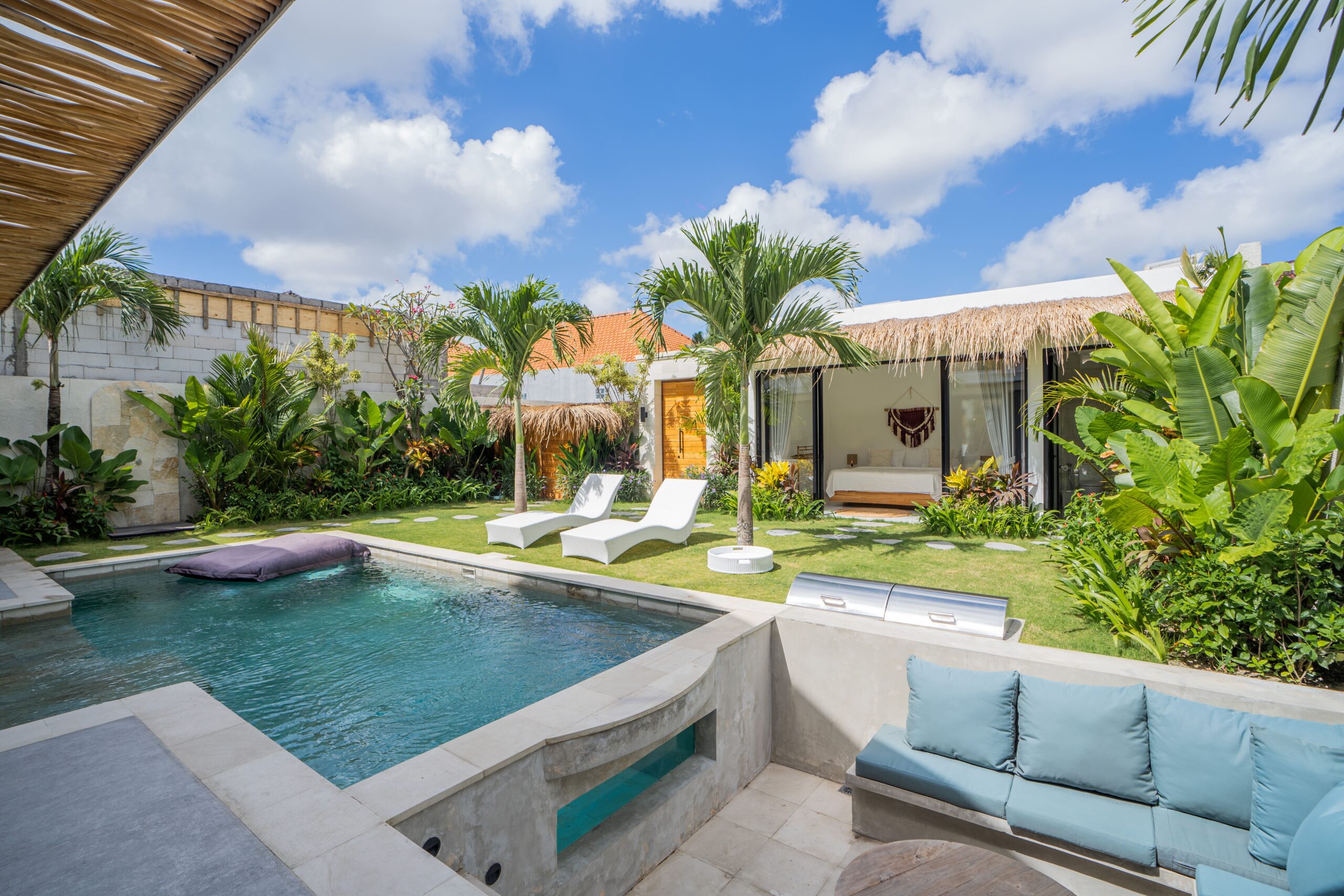
Real estate in Bali is attracting a growing number of foreign investors seeking consistent rental income and attractive returns within a strong tourism-driven market. One of the main buying strategies in Bali is off-plan, meaning the acquisition of a property before its construction or completion. While this model can offer significant financial opportunities, it is also crucial to understand the specific risks associated with a legal and administrative environment that differs from that of Western countries. This article provides an objective and structured analysis of this topic in Bali. Through concrete, data-driven examples, you will gain a clear understanding of this system and a well-defined set of opportunities and risks. The primary goal is to provide as much information as possible before a potential purchase.
Precise definition of off-plan investment in Bali
In the Balinese market, off-plan investment refers to purchasing a property at an early stage of development, prior to completion. In Bali, this system primarily concerns individual villas or villa complexes intended for tourist or residential rental.
The investor enters into a contractual agreement with a builder for a project defined by plans. The ocntract specifies the technical standards, construction timeline, and a pre-determined price. Payments are generally staggered according to the progress of the work.
This off-plan model in Bali is widespread due to strong demand, the rapid development of tourist areas, and developers' desire to secure financing upfront. Whether in Canggu, Kerobokan, or Seminyak, off-plan projects represent the majority of local real estate developments. This phenomenon can be explained by several factors:
- -Most villas are built according to detailed architectural plans or custom-designs.
- -Real estate developers commonly use off-plan sales to secure the funding of construction projects. This is the standard practice in Indonesia.
- -The Balinese market relies primarily on private contracts with significant due diligence. While legally regulated, these regulations are less stringent than in Europe, for example. A good developer in Bali will guide you through each of these contracts with complete transparency.
The characteristics of off-plan construction in Bali include
- Purchase before delivery.
- Payment in installments at each stage of construction.
- A fixed price in advance. This also applies to all extras, which must be clearly defined.
- A construction timeframe, averaging between 1 and 2 years.
- The importance of high-quality contracts and permits. The experience and transparency of all parties involved are vital.

The advantages of off-plan investment in Bali.
There are many advantages to buying an off-plan villa in Bali, for example. The main one is undoubtedly financial. It lies in a purchase price lower than the market price for a completed property. These discounts can be very significant, allowing for potential capital gains upon delivery. In Bali, the price of an off-plan property is typically 15 to 30% lower than an equivalent villa that has already been built. Furthermore, some investors, when reselling their properties, often seek a substantial capital gain, which can inflate market prices. This risk is generally lower with an off-plan purchase in Bali. The staggered payment plan also improves the investor's cash flow management. This allows investors with perhaps slightly less capital to still benefit from this opportunity.
There is also potential for your property to appreciate immediately upon delivery.
In a developing market like Bali, an off-plan property in a strategic location can benefit from significant appreciation. The number of tourists in Bali increases every year, reaching over 7 million by 2025. Many neighbourhoods are being modernized, and numerous new businesses are being built, allowing some properties to be upgraded during the construction period. This sustained tourist demand makes Bali one of the most attractive real estate markets for appreciation in the world.
These properties can be optimized for rental yield.
Off-plan purchases for foreign investors allow the property to be designed from the outset to create the best possible rental potential. This can include the layout, materials, furniture selection, and other key elements for future tenants.
Off-plan is a suitable strategy for long-term investors in Bali. The construction time allows for preparation for rental, rental yields, and property management. A new villa is also less prone to problems and maintenance costs. Even if these do occur, a new villa is often initially guaranteed by the builder.
The risks and limitations of the off-plan:
Despite its many advantages and the opportunities presented by buying an off-plan villa in Bali, it's important to also understand the risks and limitations of this system. The more structured and rigorous the approach to off-plan buying, the more potential problems can be avoided.
When buying an off-plan villa in Bali, it is normal to schedule a date for handing over the keys and starting the rental period. However, delivery delays can occur, which can lead to a slight loss of income. In Bali, the weather conditions, particularly frequent rain, can hinder the smooth progress of construction. There can also be issues with the on-site teams, material availability, and last-minute technical adjustments. It is crucial to ensure that the builder considers the possibility of compensating for delivery delays. This is a sign of quality and builds trust for the future. Be aware that this is not always the case.
The final product upon delivery can be disappointing. Obviously, a villa based on plans and 3D renderings may not be exactly as the investor envisioned it in reality. There may be differences in the finishes, the materials used, or unforeseen adjustments. It is essential to ensure that all the specifications detailed in the contract are clearly defined and strictly respected. This will depend on the quality of the builder. It is therefore important to do your research, see testimonials from previous clients, or even visit some properties that have already been built.
Legal and contractual risks exist. It is difficult for a foreigner to come to Bali with complete confidence, given a different local legal system. This is where the support of your builder, their complete transparency, and the involvement of a neutral third party, such as a local notary, are crucial. Some companies here take advantage of loopholes in local laws and may build on invalid land or with expired permits. Even if inspections are rare, they do occur, and the risk is significant.
The limitations of off-plan investments lie primarily in their dependence on market conditions. The real estate market and its prices fluctuate between the time of purchase and the delivery of the property. This fluctuation can sometimes be negative, resulting in a higher initial cost. That said, Bali is currently experiencing a steady upward trend in prices, with no indication of a decline at this stage, and this has been the case for several years.
It's also important to know that foreign investors cannot directly own an Indonesian freehold property. The most common structures are:
- Long-term leasehold, generally between 25 and 30 years, renewable
- Hak Pakai under specific conditions
- Acquisition through an Indonesian PT/PMA type company
Although 25 years may seem short, the return on investment is largely guaranteed well in advance, and renewal options are readily available. You can learn more about the legal model in Bali here: https://alphapartnerbali.com/legal/
The off-plan in Bali: A local analysis, Canggu, Kerobokan and Seminyak.
Each area in Bali has its own dynamics, attractions, and challenges. Risks and opportunities vary from neighborhood to neighborhood. The type of tourists changes depending on the season and location.
- Off-plan development in Canggu.
This is the most dynamic area and therefore has the highest international rental demand in Bali. Investment is strong, reflected in its popularity with digital nomads and couples. The continuous development of infrastructure in this area is a significant indicator of rapid potential appreciation. Even though the price per square meter is higher than elsewhere, the return on investment is equally so. Be aware of the increased competition; it's crucial to carefully choose your builder in this area.
- Off-plan in Kerobokan
Kerobokan is the perfect compromise between a very dynamic and a very peaceful area. It benefits from excellent proximity to all the main tourist attractions of Canggu and Seminyak while maintaining a more tranquil, yet developing, character. There is a slightly higher availability of long-term rentals, but the high season remains very busy as well. Entry costs are more competitive, with easy access to tourist hubs.
- Off-plan in Seminyak
This is undoubtedly Bali's most established beach resort area. Its shops, hotels, and restaurants are renowned. The clientele is somewhat more upscale, and rental prices reflect this. Seminyak enjoys a strong international reputation. Off-plan purchase prices are high, and new real estate projects are somewhat less common. That said, the high-end clientele remains strong, and property appreciation seems quite sustainable.
Ultimately, Canggu is ideal for strong, sustained rental returns. Kerobokan offers the best balance between affordability for investors and potential for appreciation. Seminyak targets a more premium but sustainable segment, and the cost is very high.

The off-plan process in Bali :
Local experience and expert guidance are essential for a successful off-plan investment in Bali. Investing in this process isn't simply a matter of signing a contract and waiting for delivery. It's crucial to monitor each stage of the project, request comprehensive follow-up, and maintain close contact with all stakeholders. Off-plan development in Bali involves several steps:
- Identifying your land, verifying its legal status, and building permits. Often, the developer will already have plots to offer, but you can still request additional documentation.
- Choosing your real estate project, selecting an existing design, or creating a custom one. All architectural and design elements are defined at this stage, including cost estimation.
- Legally structure all contracts and their terms. It is important to keep a copy of each amendment.
- Payment schedules are determined in advance, and each stage of the work must be completed correctly. A delay in payment or work will cause delays for one or both parties. All work is monitored through communication with the builder. The more responsive and transparent the builder is, the better.
- The handover and inspection in the presence of all parties is crucial. This is when the final payment is made and any finishing touches or minor adjustments are completed before the villa is rented out or occupied.
Conclusion: Off-plan activities in Bali are a real opportunity to be used with care.
Off-plan investment in Bali is supported by a very dynamic and tourist-oriented environment. This market isn't just attractive; it has been experiencing consistent positive growth for years, placing Bali among the most attractive real estate markets in terms of long-term returns.
In this context, where infrastructure is developing rapidly in Canggu, Kerobokan, and even Seminyak, it's not uncommon to see a positive appreciation in property value between the initial purchase and the delivery of the property a year later. Off-plan investment can therefore be an excellent financial option, although it's important to determine the appropriate conditions for its implementation. When properly managed, off-plan investment in Bali can be integrated into a long-term wealth management strategy for personal use or rental purposes.
Regarding rental management, you can learn more here: https://alphapartnerbali.com/rental-management/
Recent Articles


What Are the Legal Solutions for Investing in Bali as a Foreigner?

Real ROI in Bali in 2025

Top 5 Locations in Bali to Buy a Villa in 2025


The Benefits of Owning a Managed Villa in Bali